
By Nathan Bennett | Director of Innovation & Technology for Commercial & SLED
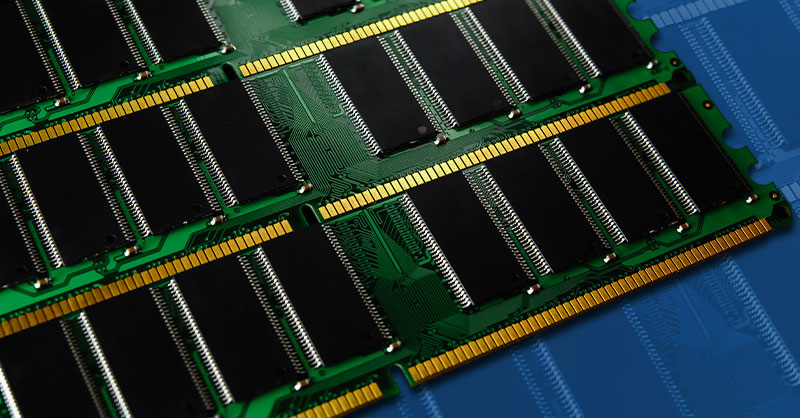
Along with the innate sense of promise and opportunity that each new year brings, 2026 has also unfortunately introduced its share of fresh new challenges, especially in the world of IT. One of the more disconcerting hurdles we’ve seen emerge is the ongoing shortage of RAM, or random-access memory, a critical component of nearly every piece of technology that’s in use today: from smartphones, gaming consoles, and personal use computers to the more complex, enterprise-level solutions that comprise the modern data center. All of which are poised to undergo price hikes in the foreseeable future—if they haven’t done so already.
So, how and why did this scarcity in memory come about? It’s generally understood that the skyrocketing demand of AI and the hyperscalers who employ it are to blame, but what really happened? Every year, for as long as the technology has existed, large companies have been distributing chips to hyperscalers; really, that’s nothing new. If that’s the case, though, then why should this year be any different? What changed, exactly, from 2025 to 2026?
The best way to answer that question is to start with a little perspective. When it comes down to it, there are essentially only three main companies who manufacture the memory chips (or dies) on which most of the world’s technology runs: Samsung, SK hynix, and Micron. But, unluckily for that trio, their RAM-driven margins have experienced a substantial decline as of late, as those memory dies are no longer the gold mines they once were. Their solution? Enter: VRAM (video random access memory), or, more specifically, HBM (high bandwidth memory) chips.
The latter are developed using the same architecture and manufacturing processes as “normal” RAM (i.e., what’s known as DDR5, the category to which most current RAM belongs). For their part, however, HBM chips are reserved almost exclusively for the graphics processing units (GPUs) that are so essential to the AI market. Those HBM chips are also vastly more profitable for the aforementioned “Big Three,” who, perhaps unsurprisingly, have shifted their focus away from the far less lucrative “standard” RAM and are now prioritizing the creation of more HBM dies. Practically speaking, this means that enterprise accelerator boards have grown more plentiful in the market while traditional RAM chips have seen a marked decrease in supply.
To make matters worse, gargantuan “gigafactories” are now springing up seemingly everywhere, driven by the voracious appetites of hyperscalers and other assorted AI boomers. Each of these mammoth facilities consumes an enormous amount of chips on its own, thereby decreasing the market’s overall supply even further, the effects of which we’re now seeing in real time, with prices subsequently soaring.
At this point, you might find yourself thinking, Well, okay, but so what? Just make more chips. Simple enough, right? Unfortunately, it’s not. Again, one must stop and consider the financial implications at play, chief of which is the fact that DDR5 chips aren’t all that profitable anymore and are even, in some cases, the leading cause of monetary loss for the manufacturers. So, from their perspective, why bother making any more? History tells us that the present shortage will, at some point, come to an end; as the Big Three see it, by the time they’re able to churn out a fresh stockpile of chips in the vast quantities that are needed (a process that could take months if not years to achieve), the market’s demand will likely have shored up once more. Meaning those chip manufacturers will have put themselves at risk of another RAM-induced profit loss, all for nothing.
The outlook, then, remains bleak. According to industry analysts, prices on everything RAM-related—and now, even storage—will continue to rise in 2026 (and beyond, for potentially up to two full years), so waiting for things in the market to just “calm down” isn’t a viable strategy. Which leads us to the obvious yet critical question of …
“What can I do?”
The worst thing organizations can do in this situation is nothing, blithely going about their business and acting like the market will reset within the next couple months. Unless something drastic changes in the global market, a quick-recovery scenario is unlikely. To that end, here are some basic steps that you can take today and how Sterling can support you in each.
A Workload Assessment
If your data center is working well for sizing, how about the workloads themselves? Our team of elite, highly certified technical experts can perform a strategic assessment of your virtualized, bare metal, and/or containerized workloads, ensuring they are running well, with the proper resources available when required. They can also help walk you through pertinent considerations such as moving from bare metal to virtualized, or refactoring over to Kubernetes. These motions take pressure off your data center, granting you more room without expanding through additional hardware.
What about the cloud?
While it’s true that it is the hyperscalers themselves who are amassing chips and driving up prices, the cloud as a whole has yet to see a surge in cost for its services. To take advantage of that, you can transition to a hybrid-type environment, where your deployments can be run in the cloud for up to 50 to 60% off list price via Sterling’s services offerings. Such a move will result in lower costs while also giving you the option of expanding your data center without unnecessarily consuming higher-dollar infrastructure.
What if I still need a data center expansion or refresh?
Before you buy, it’s imperative that you conduct an assessment to ensure the solution you’re considering is right sized for your environment, as this could dramatically reduce your costs. Likewise, Sterling will work with our OEM partners to verify that you are receiving the best deal currently available on the market—and one that is fine-tuned for your workloads. Finally, with major updates on the horizon from AMD and Intel, there is the option of consolidating your data center as well when the time comes.
All things considered, the present chip shortage and accompanying market disruption shouldn’t be treated as a cause for despair. Technology, like anything, rolls through cyclical patterns, similar to the ebb and flow of waves against a beach. Disruptions come and go; what remains constant is that Sterling will be there to support you and your organization with our industry-leading guidance, extensive services, and vast capabilities. Contact us today at connect@sterling.com to see how our team of experts can help you effectively navigate these uncertain times.