
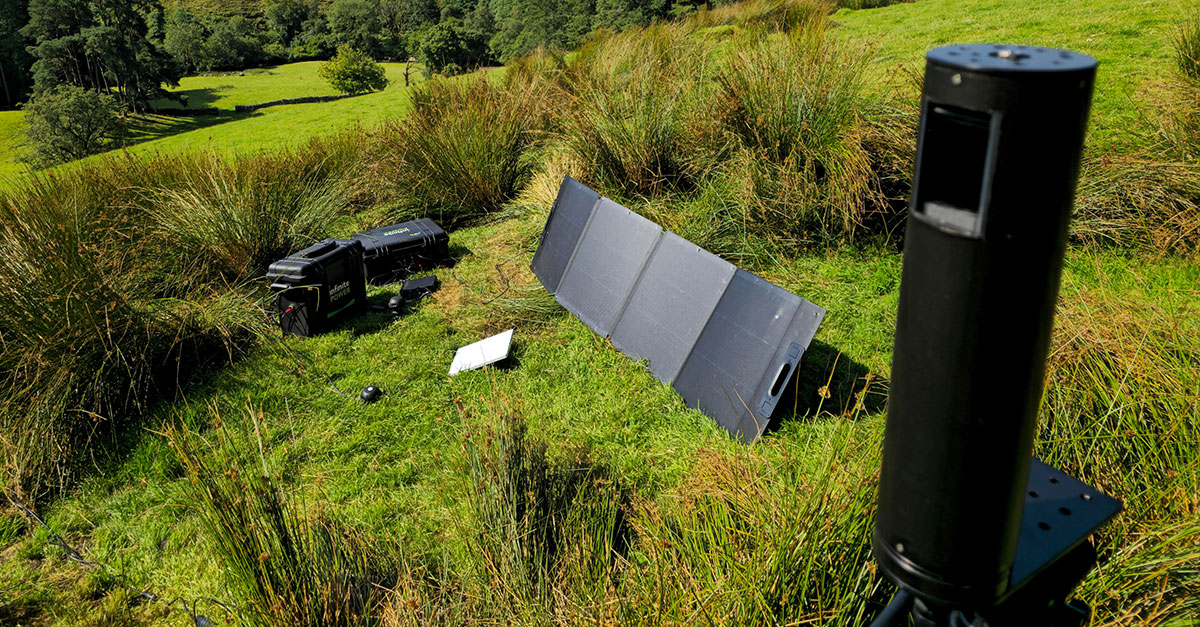
At NATO’s recent Eastern Flank Deterrence Initiative (EFDI) Accelerator 2.0 event, a collaborative military innovation and interoperability sprint held at the Defence BattleLab in Dorset, United Kingdom, Sterling evolved its Silent Sentinel solution from a remote sensing and secure data sharing framework into the foundations of a multi-vendor, geospatially enabled Command and Control (C2) demonstrator.
The exhibition illustrated how Silent Sentinel data (including acoustic, seismic, and radar events as well as computer-vision analytics and platform telemetry) can be exposed through an API integration layer, combined with third-party sensor and intelligence sources, and presented within a common operational picture.
The principle was simple: Silent Sentinel should not need to own every sensor. Instead, it should provide a vendor-neutral route for integrating the capabilities best suited to the mission.
Critical Context for Informed Decisions
Using open interfaces, APIs, and common data models, the Silent Sentinel demonstrator brought information from different systems into a coherent operational view. Rather than presenting another isolated alarm, it showed how sensor events, authorised intelligence, and visual confirmation could contribute context to the same picture and support informed decisions.
Cursor-on-Target
Sterling also showcased Silent Sentinel’s Cursor-on-Target (CoT) capabilities, a format for exchanging geospatial tactical information that allows compatible data to be represented alongside Silent Sentinel and other integrated sources.
Interoperability and Alignment
Alongside this work, Sterling established a development path towards NATO SAPIENT interoperability and alignment, helping to create a standards-based route for future sensors and systems to exchange information without requiring a bespoke integration for every capability.
Incubate. Iterate. Innovate. Integrate.
The value of EFDI Accelerator 2.0 went beyond proving that systems could exchange data. It provided an environment in which organisations could rapidly combine capabilities and solutions to explore what becomes possible when information is no longer confined within individual products.
For Sterling, the outcome was an important step towards an open ecosystem in which Silent Sentinel can contribute trusted information to a wider operational mission. The demonstrator aligns with that aim, delivering a foundation for further development, integration, and testing.
Silent Sentinel: Sense → Connect → Fuse → Understand → Decide → Act